Sleep Token is one of the most intriguing modern music projects because it deliberately avoids traditional celebrity identity. Instead of presenting themselves as individual personalities, the group operates under anonymity, masked performances, and a mythology-driven narrative centered around a fictional deity known as “Sleep.” The search term “Sleep Token unmasked” reflects a massive curiosity from fans and casual listeners who want to know who is actually behind the masks, but the reality is more complex than a simple reveal of names. The band’s identity strategy is not a mystery to be solved—it is part of the artistic concept itself, designed to shift attention away from individuals and toward emotion, sound, and storytelling.
The Core Idea Behind Anonymity
The foundation of Sleep Token’s identity system is intentional erasure of personal fame. Unlike traditional bands where recognition is built around frontmen or public personas, Sleep Token removes all visible individuality. Members are known only as Vessel and numbered designations such as II, III, and IV. This approach creates a uniform identity where each member functions as part of a ritualistic collective rather than separate celebrities. The purpose is to eliminate bias in how listeners perceive the music. Instead of associating songs with personalities, audiences are encouraged to experience them as offerings to “Sleep,” the central symbolic figure in the band’s lore.
This anonymity also reshapes how success is measured. In typical music industries, fame is tied to visibility, interviews, and personal branding. Sleep Token rejects this entirely, prioritizing emotional impact and immersive storytelling. Their identity becomes a tool to build curiosity rather than a brand to be marketed in a conventional way.
Mask Symbolism and Visual Identity
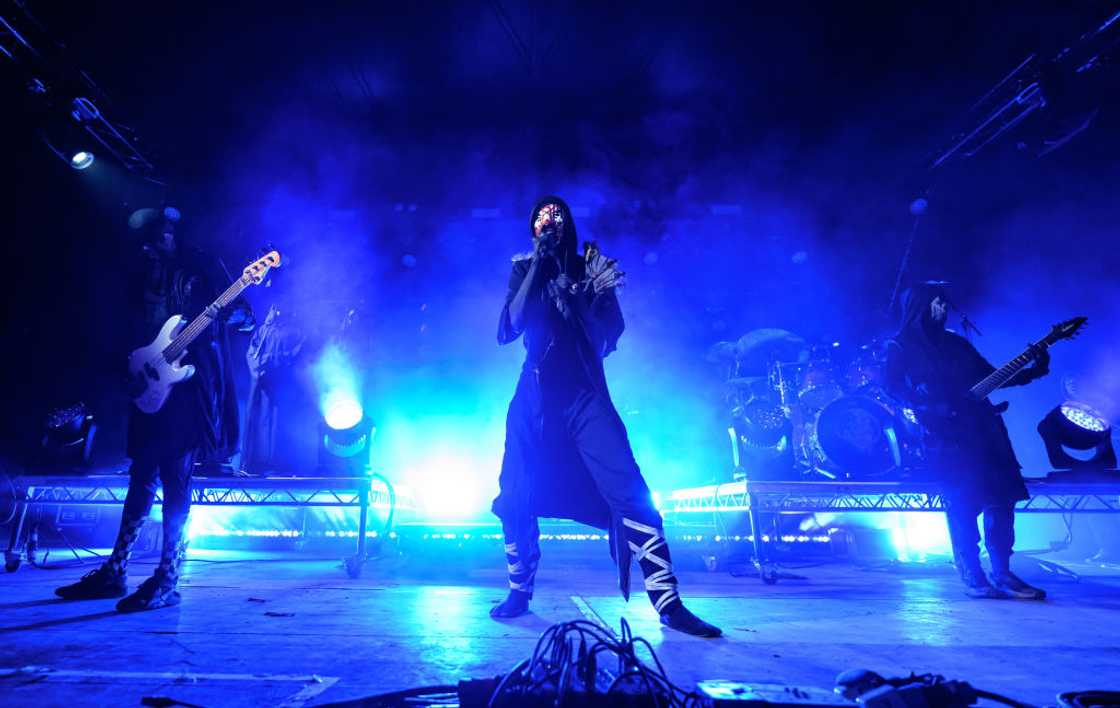
One of the most defining features of Sleep Token is their use of masks and ceremonial clothing. These masks are not random design choices—they function as psychological barriers between performer and audience. By concealing facial expressions, the band removes human identity cues that normally influence emotional interpretation. This creates a different listening experience where focus shifts entirely to voice texture, instrumentation, and lyrical meaning.
The visual presentation often includes hooded garments, dim lighting, and ritual-like stage setups. This aesthetic reinforces the idea that performances are not concerts in a traditional sense but symbolic ceremonies. The anonymity strengthens this illusion, making the band feel less like entertainers and more like participants in a narrative universe.
What Is Actually Known About the Members
Despite widespread curiosity, very little verified information exists about individual identities. The band has never officially confirmed real names or personal backgrounds. What is publicly known is limited to roles within the project and musical contributions. Vessel is the central figure in vocals and songwriting direction, while II handles drums and percussion. Other members contribute to instrumentation and live performance structure.
The absence of confirmed personal details is intentional and maintained consistently across interviews, live shows, and promotional material. This reinforces the idea that the band does not operate under traditional celebrity disclosure norms. Even when speculation appears online, it remains unconfirmed and often deliberately ignored by the band itself.
Rumors, Speculation, and Online Theories
A significant portion of online discussion surrounding Sleep Token revolves around identity speculation. Fans often attempt to connect vocal styles, musical techniques, and performance behaviors to other known artists. However, these theories remain speculative and are not supported by official confirmation. The band maintains strict separation between artistic output and personal identity, meaning that even widely circulated claims should be treated as unverified.
This speculation culture is fueled by the internet’s tendency to decode hidden information. The more the band withholds, the more audiences attempt to fill in gaps. However, this cycle is part of what sustains interest in Sleep Token. The mystery becomes self-perpetuating, driving engagement without the need for traditional publicity.
Why Anonymity Works as an Artistic Strategy
The success of Sleep Token’s identity model is not accidental. It aligns with psychological and cultural dynamics in modern music consumption. In a media environment dominated by personal branding, anonymity becomes rare and therefore highly compelling. By removing identity, the band creates a blank emotional space where listeners project their own interpretations.
This approach also reduces bias. Without knowing the personal lives, age, background, or appearance of performers, audiences evaluate music based purely on emotional resonance. This is particularly powerful in genres that rely heavily on atmosphere and mood, as Sleep Token’s music does.
Additionally, anonymity allows the band to separate private life from public performance. This creates a boundary that protects individual members from the pressures of fame while maintaining artistic control over their narrative.
Psychological Impact on Fans
One of the most interesting aspects of Sleep Token’s popularity is the psychological relationship between mystery and engagement. Humans are naturally drawn to incomplete information, a cognitive phenomenon often referred to as curiosity tension. The less information available, the more the brain attempts to resolve uncertainty.
In the case of Sleep Token, this manifests as constant discussion, analysis, and interpretation. Fans do not just listen to music—they decode it. Lyrics are analyzed for hidden meaning, visuals are interpreted symbolically, and performance elements are examined for clues. This transforms passive listening into active participation.
The anonymity also creates a form of emotional universality. Without identifiable personalities, listeners are free to connect with the music without external influence. This can make the experience feel more personal and immersive.
Media Interpretation and Narrative Framing
Media coverage of Sleep Token often falls into two categories. The first focuses on the mystery, framing the band as an enigmatic collective with hidden identities. The second focuses on artistic merit, analyzing musical style, genre blending, and thematic depth. Both approaches contribute to the band’s public perception, but neither fully resolves the identity question.
A recurring issue in coverage is the tendency to frame anonymity as something that can or should be “solved.” This creates misleading expectations for audiences who assume that real names or identities are part of a hidden reveal. In reality, the anonymity is stable and not designed to be broken.
Comparison with Other Masked or Anonymous Artists
Sleep Token exists within a broader tradition of masked or identity-concealed musical acts. Bands such as Ghost and Daft Punk also used anonymity or character-based personas, but Sleep Token differs in one major way: emotional intimacy.
While other anonymous acts often focus on theatrical performance or electronic production, Sleep Token integrates emotional vulnerability into their music. The contrast between hidden identity and highly personal lyrical themes creates a unique tension. This combination is what makes their approach distinct rather than derivative.
The Role of Mythology and Narrative
A key part of Sleep Token’s identity is the mythological structure surrounding “Sleep,” a fictional deity to whom songs are symbolically dedicated. This narrative framework transforms albums into chapters of a larger conceptual universe. Instead of standalone tracks, songs function as parts of a ritualistic storytelling system.
This mythology enhances the anonymity strategy by replacing real-world identity with fictional identity. Rather than asking “who are they,” the audience is encouraged to engage with “what is the story.” This shift from reality to narrative is central to the band’s artistic philosophy.
Why the “Unmasked” Concept Remains Misleading
The phrase “unmasked” suggests revelation or exposure, but in the case of Sleep Token, it is conceptually inaccurate. The masks are not hiding a secret to be uncovered in a traditional sense—they are part of the identity itself. Removing them would not reveal a different public persona; it would break the artistic structure entirely.
This misunderstanding often leads to unrealistic expectations among audiences searching for definitive answers. The truth is that Sleep Token’s identity is not hidden behind masks—it is constructed through them.
Conclusion and Key Takeaways
Sleep Token’s approach to identity is one of the most deliberate and cohesive artistic strategies in modern music. The anonymity is not a marketing trick or temporary gimmick but a foundational element of their creative philosophy. It reshapes how audiences interact with music, shifting focus from individuals to emotion, narrative, and atmosphere.
The ongoing fascination with “unmasked” identity reveals more about audience psychology than about the band itself. People are drawn to mystery, but Sleep Token turns that curiosity into part of the experience. Instead of providing answers, they create deeper engagement through controlled absence.
Ultimately, understanding Sleep Token is less about discovering who they are and more about recognizing why they choose not to be known.