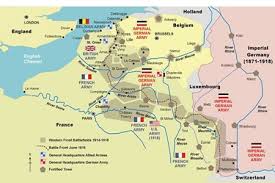
France western front Front during World War I represents one of the most significant and devastating battle zones in modern history. It stretched across northern France and Belgium, becoming the primary theater of war between the Allied Powers and the German Empire. This region defined the nature of industrial warfare and reshaped military strategy for the entire 20th century.
At its core, the Western Front was not just a battlefield but a long, static line of conflict where millions of soldiers lived, fought, and died under extreme conditions. The presence of France as the central geographic and strategic ground made it the heart of the war’s most intense fighting.
Geographic Importance of Northern France and Belgium
The battlefield extended from the North Sea coast of Belgium down to the Swiss border, cutting directly through northern and eastern France. This geography created a continuous front line of trenches, bunkers, and defensive positions.
Northern France was especially important due to:
- Dense railway networks for troop movement
- Industrial cities essential for war production
- Flat terrain ideal for advancing armies
- Proximity to Paris, the French capital
The French landscape became the foundation of trench warfare, where both sides dug deep defensive systems that stretched for hundreds of kilometers.
Formation of the Western Front
The Western Front emerged rapidly in 1914 after early German advances into Belgium and France. The initial movement phase of the war quickly turned into a stalemate when opposing armies failed to outflank each other.
This shift led to the creation of fortified trench lines, forming what is now known as the Western Front. Instead of quick victories, the war became a prolonged struggle of attrition, where gaining even a few kilometers of land required enormous human cost.
Structure of Trench Warfare in France
The trench system in France was highly organized and deeply layered. It typically included:
- Front-line trenches for active combat
- Support trenches for reinforcement troops
- Reserve trenches for resting soldiers
- Communication trenches connecting all layers
Between opposing trenches lay “No Man’s Land,” a devastated area filled with barbed wire, shell craters, and constant danger.
Soldiers lived in harsh conditions:
- Constant mud and flooding
- Rat infestations
- Limited food supply
- Exposure to artillery bombardment
- Psychological trauma from continuous shelling
This environment made the Western Front not only physically destructive but mentally exhausting for soldiers on both sides.
Key Battles That Defined France’s Western Front
Battle of Verdun
One of the most brutal battles fought on the Western Front was the Battle of Verdun. It became a symbol of French national resistance and endurance.
Key features:
- Longest battle of World War I
- Massive artillery bombardments
- Extreme casualty rates
- Strategic French defense under immense pressure
Verdun demonstrated the concept of “they shall not pass,” reflecting France’s determination to hold its territory at all costs.
Battle of the Somme
Another major conflict was the Battle of the Somme. It is remembered for its unprecedented casualties on the first day alone.
Important aspects:
- Allied offensive aimed to break German lines
- Introduction of early tank warfare
- Heavy reliance on artillery bombardment
- Limited territorial gains despite massive losses
The Somme highlighted the deadly inefficiency of trench warfare.
Ypres and the Belgian Front Connection
Although located in Belgium, battles around Ypres directly influenced northern France’s front lines. These battles involved repeated offensives and counteroffensives that shaped the stability of the Western Front.
Key outcomes:
- Expansion of trench systems
- Increased use of chemical weapons
- Strategic stalemate continuation
Role of France in the Western Front
France was not only a battlefield but also a major military and strategic player. The French army bore enormous responsibility in defending its territory against repeated German offensives.
Key contributions of France:
- Large-scale infantry mobilization
- Defensive strategy leadership
- Industrial production support
- Coordination with British and Allied forces
French soldiers endured some of the harshest combat conditions in the entire war, especially in northern regions where fighting was constant.
Life of Soldiers in French Trenches
Life in the trenches of France was defined by survival rather than comfort.
Daily realities included:
- Rotating shifts between front and reserve lines
- Constant artillery threat
- Limited medical support
- Infectious diseases spreading rapidly
- Psychological strain known as “shell shock”
Despite these conditions, soldiers developed routines, communication systems, and even temporary morale-boosting activities.
Civilian Impact in Northern France
The war severely affected French civilians living near the Western Front.
Major impacts included:
- Mass evacuation of towns and villages
- Destruction of farmland and infrastructure
- Occupation of northern regions by German forces
- Shortages of food and essential supplies
- Long-term economic damage
Entire communities were displaced, and rebuilding took years after the war ended.
Military Technology and Innovation on the Western Front
The Western Front became a testing ground for modern warfare technology.
Key innovations included:
- Machine guns dominating open battlefield movement
- Poison gas introducing chemical warfare
- Tanks developed to break trench stalemates
- Heavy artillery shaping battlefield destruction
- Aircraft used for reconnaissance and combat
These technologies permanently changed military strategy worldwide.
Strategic Challenges of the Western Front
One of the main reasons the Western Front became a prolonged stalemate was the balance between offensive and defensive power.
Key challenges:
- Defensive trenches stronger than attacking forces
- Difficult terrain across northern France
- Limited mobility due to mud and shell damage
- High casualties in small territorial gains
Military strategies evolved slowly as commanders struggled to break the deadlock.
Economic and Industrial Role of France
Northern France was heavily industrialized before the war, making it a critical economic zone.
During the war:
- Factories were converted to military production
- Rail systems were used for troop movement
- Agricultural land was damaged or abandoned
- Industrial output shifted to artillery and ammunition
This economic transformation supported prolonged Allied resistance.
Psychological and Social Effects of the War
The Western Front had long-lasting psychological effects on soldiers and civilians.
Common experiences included:
- Trauma from continuous bombardment
- Loss of entire family members in combat
- Fear of trench raids and night attacks
- Social disruption in French society
These effects influenced post-war literature, art, and national identity in France.
End of the Western Front and Its Aftermath
The Western Front finally collapsed in 1918 after sustained Allied offensives and internal weakening of German forces. The armistice marked the end of active combat and led to major political changes in Europe.
Aftermath included:
- Reconstruction of northern France
- Burial and memorialization of soldiers
- Redrawing of European borders
- Long-term military reforms
The legacy of the Western Front continued to shape global conflicts in the following decades.
Conclusion: Why the Western Front Still Matters Today
The Western Front in France remains one of the most studied military theaters in history. It represents the shift from traditional warfare to industrial-scale conflict, where technology, logistics, and human endurance determined outcomes more than battlefield tactics alone.
Its lessons continue to influence modern military strategy, international relations, and historical understanding of global conflict.