Small home hacks singapore Singapore often means adapting to compact housing layouts, especially in HDB flats and condominiums where every square meter matters. Limited space does not necessarily mean limited comfort, but it does require smarter planning, better organization, and intentional lifestyle habits. The key challenge is not just storing things, but creating a home that feels open, functional, and visually calm even when space is restricted.
Small homes demand a combination of design thinking and daily discipline. Instead of focusing only on decoration, the real transformation happens when storage, layout, and behavior work together. A well-optimized small home reduces stress, improves movement flow, and makes everyday routines easier without constant clutter buildup.
Space-First Mindset Before Any Changes
Before introducing any physical changes to your home, the first step is to shift how you think about space usage. Most small-home issues come from accumulation rather than lack of storage.
Key principles include:
- Every item must justify its presence
- Flat surfaces should remain as clear zones, not storage zones
- Multi-use spaces are more valuable than single-purpose areas
- Visibility equals clutter perception, even if storage is organized
A practical checkpoint is to evaluate every room and ask whether it serves more than one function. For example, a living room can also function as a workspace, reading area, or dining extension when designed properly.
Vertical Space Optimization Strategy
One of the most underutilized assets in small Singapore homes is vertical space. Walls are often left empty while floors become overcrowded.
Effective vertical optimization includes:
- Installing full-height shelving units instead of short cabinets
- Using wall-mounted storage in kitchens and bathrooms
- Adding hooks behind doors for daily-use items
- Utilizing ceiling-level storage for seasonal or rarely used items
Advanced tip: Divide walls into three zones—lower (daily use), middle (weekly use), and upper (storage-only). This prevents unnecessary stretching or clutter in reachable areas while maximizing storage efficiency.
Multi-Functional Furniture Integration
Furniture in small homes should never serve a single purpose when space is limited. Multi-functional design helps reduce item count while increasing usability.
High-impact options include:
- Sofa beds for dual living and sleeping use
- Storage beds with hydraulic lift compartments
- Foldable dining tables attached to walls
- Ottomans with internal storage
- Modular shelving that can be rearranged as needed
When selecting furniture, prioritize hidden storage features over purely aesthetic pieces. A slightly larger item with storage capability is often more valuable than minimal decorative furniture.
Smart Kitchen Space Engineering
Kitchens in Singapore homes are typically compact, which makes organization critical. A cluttered kitchen directly impacts cooking efficiency and cleanliness.
Optimization techniques include:
- Magnetic strips for knives and metal tools
- Hanging racks for pots and pans
- Stackable containers for dry goods
- Drawer dividers for utensils and spices
- Pull-out corner shelves for deep cabinet spaces
Advanced system approach: Arrange kitchen items based on cooking workflow rather than category. For example, keep cutting tools, spices, and cookware in a sequential layout that matches preparation steps.
Hidden Storage Opportunities
Small homes often have unused or overlooked spaces that can significantly increase storage capacity without renovation.
Common hidden areas include:
- Space under beds and sofas
- Gaps above cabinets
- Corners between furniture pieces
- Behind doors and wardrobes
- Inside stair risers (for duplex units)
A strategic method is to map your home and identify “dead zones.” These are areas that serve no active function but still occupy physical space. Converting these zones into storage creates instant efficiency without affecting movement flow.
Visual Expansion Techniques
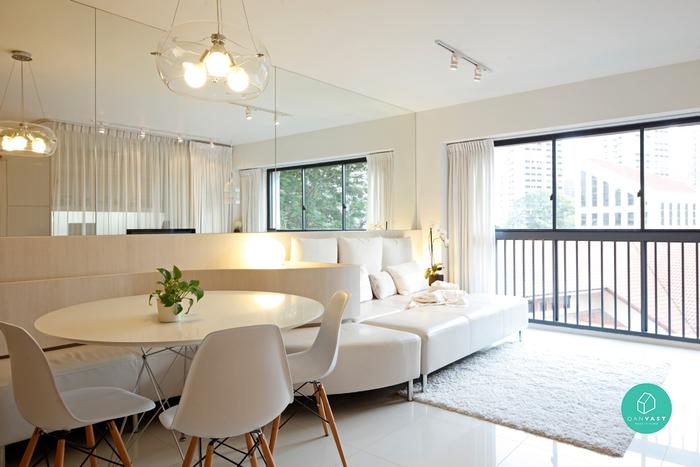
Creating the feeling of a larger home is just as important as actual storage optimization. Visual perception plays a major role in how spacious a home feels.
Effective techniques include:
- Using light-colored walls to reflect natural light
- Installing mirrors opposite windows for depth illusion
- Choosing furniture with exposed legs instead of block bases
- Keeping floor visibility as clear as possible
- Using glass or transparent materials for partitions
Lighting also plays a major role. Layered lighting using ambient, task, and accent sources helps remove dark corners, making rooms feel more open and balanced.
Decluttering System Instead of One-Time Cleaning
Most people declutter once, but small homes require ongoing systems rather than occasional cleaning.
A sustainable decluttering approach includes:
- One-in-one-out rule for new items
- Weekly 10-minute reset for each room
- Monthly category review (clothes, kitchen, storage)
- Seasonal purge for unused items
Advanced habit: Assign a “temporary holding zone” for uncertain items. If something remains unused after 30–60 days, it should be removed or donated.
Room-by-Room Optimization Framework
Living Area Efficiency
- Use wall-mounted TV units instead of bulky stands
- Keep seating minimal but flexible
- Use nesting tables instead of multiple side tables
Bedroom Optimization
- Store off-season clothing under bed
- Use vertical wardrobes with internal segmentation
- Avoid floor-based clutter zones
Bathroom Space Control
- Install wall-mounted organizers
- Use over-toilet shelving units
- Keep only daily essentials visible
Each room should follow the same principle: floor space is movement space, not storage space.
Behavioral Adjustments for Long-Term Results
No matter how good the design is, poor habits can quickly recreate clutter. Small homes require disciplined routines.
Key behavioral improvements:
- Put items back immediately after use
- Avoid “temporary placement” habits
- Keep entry points clear of shoes and bags
- Limit duplicate items in every category
A strong approach is to assign “home zones” for every object category. If something does not have a defined location, it automatically becomes clutter.
Advanced Space Engineering Concepts
For more optimized living, consider deeper design strategies used in compact architecture.
These include:
- Zoning: dividing home into functional activity zones
- Flow design: ensuring smooth movement without obstruction
- Layered storage: combining visible and hidden storage systems
- Modular adaptability: furniture that changes function over time
Another advanced method is “negative space design,” where empty space is intentionally preserved to reduce visual overload and improve mental comfort.
Common Mistakes to Avoid in Small Homes
Many optimization efforts fail due to repeated mistakes:
- Overfilling storage units until they become unusable
- Buying furniture before planning layout
- Ignoring walking paths and movement flow
- Using too many decorative items
- Storing rarely used items in prime space areas
Avoiding these mistakes often creates more space than adding new storage solutions.
Building a Long-Term Small Home System
The goal of small home optimization is not a one-time transformation but a sustainable system that maintains order over time.
A strong system includes:
- Defined storage rules for every category
- Regular maintenance routines
- Flexible furniture arrangement strategy
- Continuous removal of unnecessary items
When these systems are in place, even a very small home can feel spacious, functional, and visually balanc