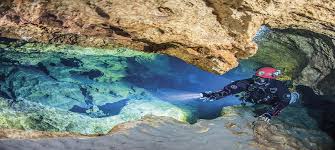
Cave diving scuba is one of the most advanced and challenging forms of scuba diving, involving exploration of underwater caves where natural light is limited or completely absent. Unlike open-water diving, cave environments are overhead environments, meaning a direct vertical ascent to the surface is not possible at many points inside the system. This makes navigation, air management, and psychological control extremely important. Cave diving attracts divers who are not only experienced but also highly disciplined, as it combines technical skill, physical endurance, and mental focus. The environment is silent, dark, and often narrow, requiring precision in every movement.
Understanding What Makes Cave Diving Different
Cave diving is not just another variation of scuba diving; it is a specialized discipline. The biggest difference lies in the environment. In open water, a diver can ascend anytime if something goes wrong. In caves, that option is restricted. Divers must follow guidelines, manage gas supply carefully, and maintain awareness of their exit path at all times. Another major difference is visibility. While open water may offer long visual range, cave systems can quickly shift from clear water to complete darkness. This creates a unique challenge where navigation depends on equipment like guide lines and dive lights rather than natural orientation.
Types of Underwater Cave Environments
Cave diving locations vary widely depending on geological formations. Limestone caves are among the most common, formed over thousands of years through water erosion. These caves often feature tunnels, chambers, and intricate passage systems. Cenotes, particularly found in regions like Mexico, are sinkholes filled with crystal-clear freshwater, offering some of the most visually stunning cave diving experiences in the world. There are also lava tube caves formed by volcanic activity, though these are less common. Each environment presents different challenges in terms of depth, flow of water, and structural complexity.
Why Divers Are Drawn to Cave Exploration
Despite the risks, cave diving has a strong appeal. Many divers describe it as entering another world where silence and darkness create a sense of isolation from the surface. The visibility in some cave systems can be extraordinary, with crystal-clear water and light beams filtering through openings. Others are drawn by the technical challenge, as cave diving pushes the limits of skill, discipline, and planning. For experienced divers, it represents the highest level of underwater exploration and personal achievement.
Training Path and Progression Levels
Cave diving requires structured training rather than self-learning. Divers typically begin with basic open-water certification, followed by advanced open-water training. After gaining experience, they may move into technical diving courses before entering cavern diving programs, which introduce overhead environment skills in a limited and controlled setting. Full cave diving certification is the final stage and involves advanced navigation, emergency procedures, and gas management. Training focuses heavily on discipline, repetition, and mastering procedures under stress. Progression is intentionally slow to ensure safety and skill development.
Essential Equipment Used in Cave Diving
Equipment used in cave diving is significantly more advanced than standard scuba gear. Divers rely on redundant systems to ensure safety in case of equipment failure. This includes multiple air tanks or dual-cylinder setups. Lighting is critical, with at least three independent light sources required in most training systems. Primary lights illuminate the path, while backup lights are essential in case of failure. Guide reels and lines are used to maintain a continuous connection to the exit point, preventing disorientation. Buoyancy control devices and specialized fins help divers navigate tight spaces with precision. Every piece of equipment is chosen with redundancy and reliability in mind.
Navigation and Guideline Systems
One of the most important safety techniques in cave diving is the use of guide lines. These lines are physically laid from the entrance of the cave and extended as divers move deeper. They serve as a lifeline that leads back to the exit. Divers use reels to deploy and follow these lines, ensuring they never lose orientation. In low visibility or silt-heavy conditions, these guidelines become the only reliable navigation method. Proper line handling techniques are taught extensively during training to avoid entanglement or loss of direction.
Air Management and Gas Planning
Air supply management is one of the most critical aspects of cave diving. Divers follow strict gas rules, often referred to as the rule of thirds. One-third of the gas supply is used for entering the cave, one-third for returning, and one-third is reserved for emergencies. This conservative approach ensures that even in unexpected situations, divers have enough air to safely exit. Gas planning also considers depth, exertion level, and potential delays. Advanced divers may use mixed gases depending on dive complexity and depth.
Safety Risks and Environmental Hazards
Cave diving carries inherent risks that require careful management. One of the biggest dangers is disorientation, especially in low visibility conditions caused by disturbed sediment. Silt-out situations can reduce visibility to zero within seconds. Equipment failure is another risk, which is why redundancy is essential. Psychological stress can also impact decision-making, especially in confined spaces. Other hazards include entanglement, depth-related pressure issues, and navigation errors. Proper training and strict adherence to protocols significantly reduce these risks.
Mental Preparation and Psychological Control
Mental discipline is just as important as physical skill in cave diving. Divers must remain calm under pressure and make precise decisions even in stressful situations. Panic is one of the most dangerous reactions in a cave environment. Training emphasizes controlled breathing, situational awareness, and methodical problem-solving. Many divers practice visualization techniques before dives, mentally rehearsing their route, emergency procedures, and exit strategy. Confidence comes from preparation rather than improvisation.
Common Mistakes Made by Beginners
Many incidents in cave diving occur due to avoidable mistakes. One common error is exceeding training limits by entering caves beyond skill level. Another is poor gas management, such as ignoring reserve rules. Some divers also fail to maintain proper buoyancy, causing silt disturbance and reduced visibility. Equipment mismanagement, such as not checking backup lights or reels, is another frequent issue. Lack of communication and failure to follow team protocols can also increase risk. Avoiding these mistakes requires discipline and continuous training.
Physical and Technical Skills Required
Cave diving demands strong physical fitness, but technical skills are even more important. Divers must master buoyancy control to avoid contact with cave floors and ceilings. Finning techniques are designed to minimize sediment disturbance. Navigation skills are essential for maintaining orientation. Divers also need strong situational awareness to track gas consumption, depth changes, and team positioning simultaneously. These combined skills ensure safe and efficient movement through complex cave systems.
Step-by-Step Progression Roadmap for New Divers
A structured path is essential for anyone interested in cave diving. The journey typically begins with basic scuba certification, followed by experience building in open water environments. Next comes advanced training focused on navigation and deep diving. Cavern diving introduces overhead environment awareness in safer conditions near cave entrances. After sufficient experience, divers progress to full cave certification, where they learn advanced penetration techniques. Continuous practice and real-world experience are necessary even after certification.
Environmental Awareness and Conservation
Cave diving also involves responsibility toward fragile underwater ecosystems. Many cave systems contain unique geological formations and sensitive aquatic life. Divers are trained to avoid physical contact with cave walls and formations to prevent damage. Proper finning techniques and buoyancy control help preserve visibility and ecosystem integrity. Responsible diving practices ensure that these environments remain protected for future exploration.
Technology and Modern Advancements in Cave Diving
Modern cave diving benefits from advanced technology such as improved dive computers, high-intensity LED lighting, and more reliable breathing systems. Some divers also use underwater mapping tools and digital compasses to enhance navigation. Communication systems are limited underwater but surface support teams often play a critical role in monitoring dive plans and timing. These advancements have increased safety and expanded exploration capabilities.
Conclusion: The Reality of Cave Diving
Cave diving represents the highest level of scuba diving complexity, combining technical expertise, environmental awareness, and mental discipline. It is not a recreational activity for casual swimmers but a structured and highly trained discipline. The appeal lies in exploration, challenge, and the discovery of hidden underwater worlds. However, the risks require respect, preparation, and strict adherence to safety protocols. For those who commit to proper training and gradual progression, cave diving offers an unmatched experience of underwater exploration that few other activities can provide.