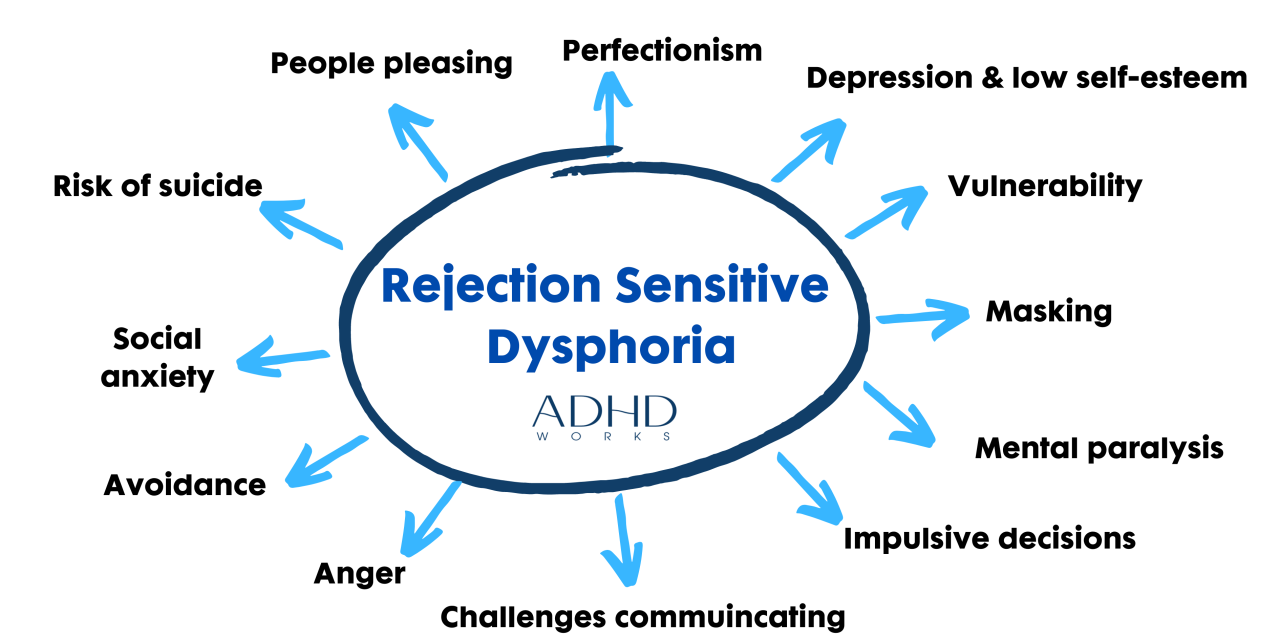
What is rsd Sensitive Dysphoria refers to an intense emotional response triggered by real or perceived rejection, criticism, or failure. It is not officially classified as a standalone medical diagnosis, but it is widely used in psychology discussions, especially in relation to attention-related conditions like ADHD.
The key idea behind RSD is not just “feeling hurt” from rejection, but experiencing an overwhelming emotional reaction that feels sudden, painful, and difficult to control. People with RSD often describe it as an emotional shock that is much stronger than the situation seems to justify.
This response is typically automatic, meaning it happens before rational thinking can step in. That is why many individuals with RSD feel confused afterward, wondering why a small comment, delayed reply, or minor criticism felt so intense.
Core Emotional Experience Behind RSD
The emotional pattern of RSD usually includes a combination of:
- Sudden emotional pain after criticism or rejection
- Feeling of shame or embarrassment
- Intense fear of disappointing others
- Overthinking social interactions repeatedly
- Strong internal self-criticism
This emotional reaction is not always visible externally. Many people with RSD appear calm or composed outwardly while experiencing intense internal distress.
A defining feature is the speed of emotional escalation. A small trigger can quickly turn into a full emotional spiral within minutes.
Common Triggers That Activate RSD
RSD is often activated by situations that involve social evaluation or perceived judgment. Common triggers include:
- Being corrected in public or private
- Receiving negative feedback
- Seeing delayed responses to messages
- Feeling ignored in conversations
- Perceived tone of disappointment
- Comparison with others
- Fear of letting someone down
Even neutral situations can be misinterpreted as rejection when the emotional sensitivity is high. For example, a short reply like “ok” or “fine” may be perceived as disapproval.
This interpretation happens automatically, without conscious decision-making.
Emotional and Behavioral Symptoms
RSD affects both emotional states and behavior patterns. The most commonly reported symptoms include:
Emotional reactions
- Sudden sadness or emotional pain
- Intense anxiety after social interactions
- Feelings of worthlessness after criticism
- Emotional overwhelm disproportionate to event size
Cognitive patterns
- Overanalyzing conversations repeatedly
- Assuming negative intent from others
- Difficulty trusting positive feedback
- Persistent fear of rejection
Behavioral responses
- Avoiding social situations
- People-pleasing to prevent rejection
- Over-apologizing
- Withdrawing from communication
- Procrastination due to fear of failure
These behaviors often develop as protective mechanisms to avoid emotional pain.
Why RSD Is Strongly Linked to ADHD
Research and clinical observation show a strong association between RSD-like symptoms and attention regulation differences in ADHD.
People with ADHD often experience:
- Emotional regulation difficulties
- Heightened sensitivity to social feedback
- Impulsivity in emotional reactions
- Strong internal responses to perceived criticism
One explanation is that the brain’s emotional regulation system reacts more intensely and takes longer to recover after emotional triggers. This creates a cycle where emotional pain is both stronger and longer-lasting.
However, RSD is not exclusive to ADHD. It can also appear in individuals with anxiety, trauma histories, or high emotional sensitivity.
Psychological Mechanism Behind RSD
The emotional process in RSD can be understood in three stages:
Stage 1: Perception
A social cue is interpreted as rejection, such as a tone change, message delay, or critical comment.
Stage 2: Emotional Surge
The brain activates a strong emotional response. This can feel like sudden shame, panic, or sadness.
Stage 3: Interpretation Loop
The mind begins analyzing the event repeatedly, trying to “fix” or understand what went wrong, which reinforces emotional distress.
This loop can continue even when there is no actual rejection, making the emotional experience feel real and persistent.
RSD vs Normal Sensitivity
Everyone experiences rejection emotionally, but RSD differs in intensity and duration.
Normal sensitivity:
- Emotional response is proportional
- Recovery happens relatively quickly
- Rational thinking can balance emotions
RSD sensitivity:
- Emotional reaction is extreme
- Recovery is slow
- Thoughts keep replaying the situation
- Emotional pain feels physically intense
This difference is why RSD can significantly affect relationships, work performance, and self-esteem.
impact on Daily Life
RSD can influence multiple areas of life, including:
Relationships
- Fear of abandonment or rejection
- Misinterpreting neutral behavior as negative
- Difficulty expressing emotional needs
- Overdependence on reassurance
Work or studies
- Fear of feedback from authority figures
- Avoidance of tasks that might result in criticism
- Overworking to avoid mistakes
- Emotional shutdown after evaluation
Personal self-image
- Low confidence
- Harsh self-judgment
- Feeling “not good enough” despite achievements
Over time, these patterns may lead to chronic stress or emotional exhaustion.
Coping Strategies That Actually Help
Managing RSD involves both emotional regulation and cognitive restructuring. Effective strategies include:
Emotional awareness training
Learning to recognize the first signs of emotional escalation helps reduce intensity before it grows.
Pause before reaction
Delaying response to triggering situations prevents impulsive emotional decisions.
Reframing interpretation
Instead of assuming rejection, consider alternative explanations:
- The person may be busy
- The tone may be neutral, not negative
- Feedback may be task-focused, not personal
Self-validation practice
Developing internal reassurance reduces dependence on external approval.
Therapy approaches
Cognitive Behavioral Therapy and emotional regulation therapy techniques can help retrain response patterns over time.
Misunderstandings About RSD
There are several misconceptions:
- It is not “just being sensitive”
- It is not simply overreacting
- It is not officially classified as a standalone disorder
- It does not mean someone is weak emotionally
Instead, it is better understood as an amplified emotional response system tied to perception and regulation differences.
Why RSD Feels So Intense Internally
One of the most important aspects of RSD is that the emotional pain is not imaginary. The brain processes social rejection in a way similar to physical pain pathways. This is why rejection can feel “physically painful” or overwhelming.
For individuals experiencing it, the reaction feels completely real, even if the external situation is minor. This mismatch between event size and emotional response is what creates confusion and distress.
Long-Term Outlook and Management
RSD does not typically disappear overnight, but it can be managed effectively. Over time, individuals can:
- Reduce emotional intensity through awareness
- Improve response control in triggering situations
- Build resilience to criticism
- Strengthen self-worth independent of external validation
Progress is usually gradual, not instant, but consistent emotional regulation practice leads to noticeable improvement.
Conclusion: Understanding RSD in a Practical Way
Rejection Sensitive Dysphoria is best understood as a heightened emotional response system to perceived rejection or criticism. It is closely linked with attention and emotional regulation differences, especially in ADHD, but it can appear in various psychological contexts.
The most important insight is that RSD is not about exaggeration—it is about sensitivity in emotional processing. When understood correctly, it shifts from being confusing and overwhelming to something that can be recognized, managed, and gradually improved through awareness and structured coping strategies.