Kitchen organization in Singapore is not just about aesthetics; it is about survival in compact living spaces. Most HDB flats and condominiums have limited kitchen footprints, meaning every centimeter must be optimized. Unlike large Western kitchens, Singapore kitchens often combine cooking, storage, and sometimes laundry functions in one tight area. This creates constant clutter pressure, especially when multiple appliances and dry goods accumulate over time. The key to success is not just organizing once, but designing a system that continuously maintains order with minimal effort.
Core Principle of Smart Kitchen Organization in Small Spaces
Before adding storage solutions, the most important principle is understanding that organization starts with elimination, not arrangement. A cluttered kitchen cannot be fixed by containers alone. Every item must justify its space based on frequency of use, necessity, and functional value. In Singapore homes, the biggest mistake is over-purchasing gadgets that duplicate functions. A streamlined kitchen always performs better than a heavily stocked but disorganized one.
Checkpoints for foundational clarity:
- Remove duplicate utensils and unused appliances
- Categorize items by cooking frequency
- Identify dead storage zones
- Separate essential vs occasional-use tools
- Clear countertops as non-negotiable working space
Zoning Strategy for Maximum Kitchen Efficiency
One of the most effective methods for kitchen organization is dividing the kitchen into functional zones. This reduces unnecessary movement and increases cooking efficiency. Even in small kitchens, zoning can be applied with smart placement rather than physical separation.
Cooking preparation zone should include cutting boards, knives, mixing bowls, and frequently used spices. Cooking zone should be around stove and include oil, ladles, pans, and seasoning essentials. Cleaning zone must remain near the sink with dishwashing liquid, sponges, and drying racks. Storage zone should be for bulk items, appliances, and rarely used cookware.
Key zoning checkpoints:
- Keep cooking essentials within arm’s reach of stove
- Store cleaning supplies under sink or vertical cabinet organizers
- Avoid mixing raw ingredient storage with cleaning materials
- Ensure workflow flows in one direction: storage → prep → cook → clean
Vertical Space Utilization Strategy for HDB Kitchens
In Singapore kitchens, vertical space is often underused. Walls, cabinet doors, and even fridge sides provide valuable storage potential. Proper vertical organization can increase storage capacity without expanding physical footprint.
Wall-mounted solutions such as magnetic knife strips, hanging racks, and spice shelves significantly reduce countertop clutter. Cabinet interiors can be upgraded with stackable shelves or pull-out organizers. Even the back of cabinet doors can hold cleaning supplies or lightweight tools.
Vertical optimization checkpoints:
- Install hooks for ladles, pans, and mugs
- Use tiered shelves inside cabinets
- Add hanging rails above countertops
- Use magnetic strips for knives and metal tools
- Store lightweight items at higher levels, heavy items below
Appliance Management System for Small Kitchens
One of the biggest challenges in Singapore kitchens is managing multiple appliances like rice cookers, air fryers, blenders, and kettles. Without proper systemization, countertops become overcrowded quickly.
A smart approach is categorizing appliances into daily-use, weekly-use, and occasional-use groups. Daily-use appliances should remain accessible but not permanently exposed if space is limited. Weekly-use appliances should be stored in easily accessible cabinets, while occasional-use appliances should be placed in higher or deeper storage zones.
Appliance control checkpoints:
- Keep maximum 2–3 appliances visible on countertop
- Use appliance stacking shelves for vertical stacking
- Assign a dedicated cabinet “appliance garage”
- Rotate appliance usage based on cooking habits
- Avoid duplicate cooking functions (e.g., multiple heating devices)
Smart Storage Solutions for Cabinets and Drawers
Cabinets and drawers are the backbone of kitchen organization. However, without internal structure, they quickly become chaotic. Smart storage depends on segmentation and accessibility rather than just capacity.
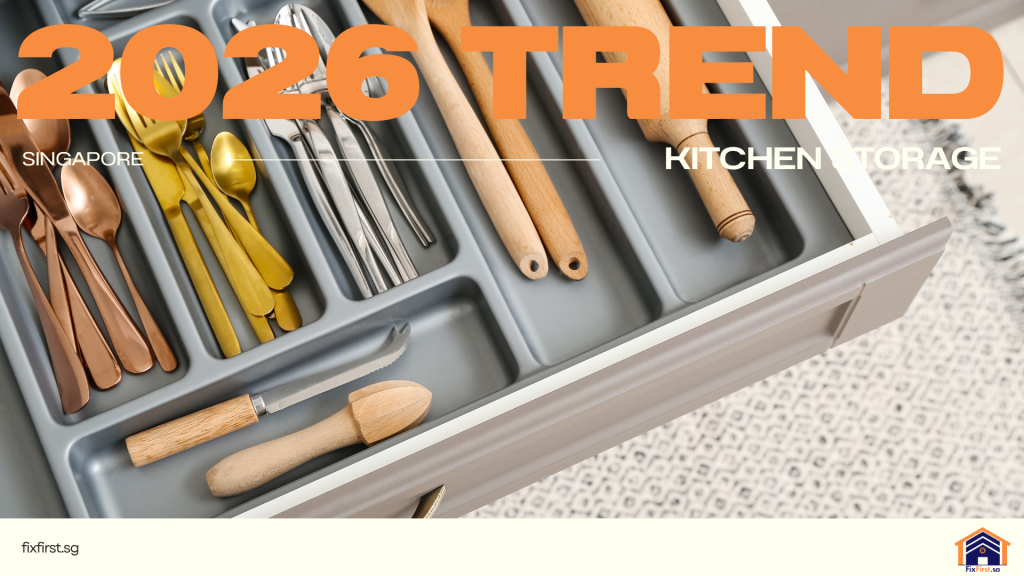
Drawer dividers help separate utensils, cooking tools, and cutlery. Clear containers improve visibility and reduce wasted time searching for ingredients. Pull-out shelves improve access to deep cabinet storage, especially in narrow HDB kitchens.
Storage optimization checkpoints:
- Use labeled containers for dry goods
- Install drawer dividers for utensil separation
- Stack plates vertically instead of horizontally
- Use transparent storage bins for quick identification
- Avoid deep stacking without access layers
Countertop Discipline System for Daily Maintenance
Countertops in Singapore kitchens are often the first area to become cluttered. Maintaining a disciplined countertop system is essential for long-term organization success. The goal is not just cleanliness but controlled usage.
A strong rule is limiting countertop items to essential daily tools only. Anything not used daily should be stored away. This reduces visual clutter and increases usable workspace for cooking.
Countertop control checkpoints:
- Maintain “maximum 3-item rule” on counters
- Keep only active cooking tools visible
- Clear surfaces immediately after cooking
- Avoid permanent storage of appliances on counters
- Dedicate one zone strictly for food preparation
Behavior-Based Organization for Long-Term Success
Kitchen organization fails when it ignores human behavior. In Singapore households, multiple family members may use the kitchen differently, leading to inconsistent habits. A system must account for these behavioral differences.
For example, placing items where they are naturally used reduces the chances of misplacement. Frequently used snacks should be accessible to everyone, while cooking spices should remain in controlled zones. Children-friendly organization also helps reduce clutter caused by repeated searching and rearranging.
Behavior optimization checkpoints:
- Store items where they are naturally used
- Assign zones per family activity
- Create “return rules” after usage
- Reduce steps needed to access essentials
- Design for habit, not perfection
Maintenance System for Always-Organized Kitchen
A well-organized kitchen is not a one-time project but a continuous system. Without maintenance, even the best organization collapses within weeks. A structured maintenance routine ensures long-term stability.
Daily maintenance involves quick resets after cooking, wiping surfaces, and returning items to their zones. Weekly maintenance includes fridge cleaning, expired item removal, and cabinet tidying. Monthly maintenance focuses on deep decluttering and reorganizing storage efficiency.
Maintenance checkpoints:
- 5-minute daily reset after cooking
- Weekly expiration check for pantry items
- Monthly review of appliance usage
- Seasonal decluttering of unused tools
- Continuous improvement of storage layout
Budget-Friendly Organization Approach for Singapore Homes
Not all organization systems require expensive products. Many effective solutions can be achieved using affordable or DIY methods. In Singapore, where rental and HDB living is common, flexibility is more important than permanent installations.
Affordable strategies include using stackable plastic bins, repurposing jars for storage, and installing removable hooks. DIY drawer separators can also be created using cardboard or simple plastic dividers.
Budget optimization checkpoints:
- Prioritize function over aesthetics
- Reuse containers for storage systems
- Avoid overbuying specialized organizers
- Focus on modular and movable solutions
- Upgrade gradually instead of all at once
Common Mistakes in Kitchen Organization Singapore Homes
Many kitchens fail due to repeated mistakes rather than lack of effort. Understanding these mistakes helps avoid long-term clutter buildup.
Common issues include overloading cabinets, storing rarely used items in prime spaces, and ignoring workflow logic. Another major issue is buying storage tools before decluttering, which often worsens the problem.
Mistake prevention checkpoints:
- Do not organize without decluttering first
- Avoid overcrowding storage zones
- Do not store by category alone; use frequency logic
- Avoid fixed placement for flexible-use items
- Never rely solely on containers to solve clutter
Final System for a Fully Optimized Singapore Kitchen
A truly efficient kitchen in Singapore is not defined by size but by system design. When zoning, vertical storage, appliance control, and behavior-based organization are combined, even the smallest kitchen can feel spacious and functional. The ultimate goal is to reduce effort, minimize visual noise, and create a natural flow that supports daily cooking without stress. Consistency is what transforms a simple kitchen into a long-term organized space that remains stable under real-life conditions.